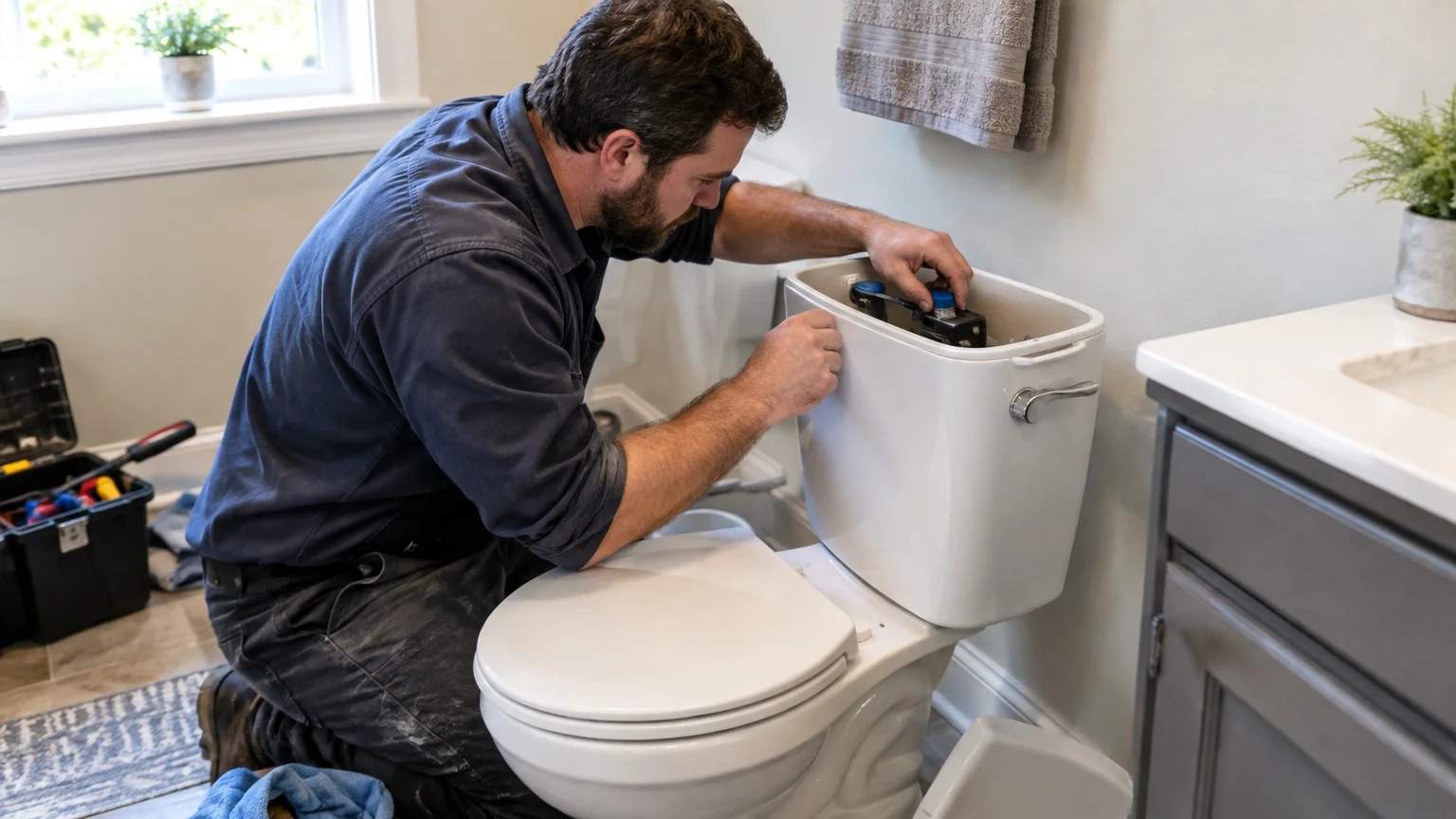
A toilet not flushing fix often begins with the handle, chain, tank water level, and flapper. A small clog may need careful plunging. Repeated clogs, leaks, or a weak flush may point to broken parts or a deeper drain problem. Safe checks can help, but some problems need a plumber.
Why is my toilet not flushing properly?
A toilet may not flush because the tank is low, the handle is loose, or the chain has come off. A worn flapper can also stop the flush. A clog in the toilet trap may keep water from moving through the bowl. The right fix depends on whether the trouble starts in the tank or below the bowl.
The tank holds the water used for flushing. The handle lifts the flapper, which is the rubber seal over the flush valve. Water then enters the bowl and pushes waste through the trap and drain. If one part fails, the toilet may flush weakly, run after flushing, or not flush at all.
How do the toilet tank, flapper, and flush valve work together?
The handle connects to a small chain or rod. That piece lifts the flapper when you press the handle. The flush valve is the opening under the flapper. It lets tank water move into the bowl. After the tank drains, the flapper should close and the fill valve should refill the tank.
A loose chain may not lift the flapper far enough. A stretched flapper may let water leak into the bowl. A worn fill valve may not put enough water into the tank. These faults often lead to toilet repair needs in homes, rentals, and small businesses.
What causes a weak or failed flush?
Low tank water can make the flush weak. The water should sit close to the fill line marked inside the tank. A broken handle, bent lever, or loose chain can also stop the flush valve from opening. Mineral buildup under the bowl rim may reduce the water flow.
A clogged trap is another common cause. The trap is the curved passage inside the toilet. It holds water and helps block sewer gases. If paper or another item blocks it, the bowl may drain slowly or rise during a flush. A toilet bowl fill valve repair may help when the tank will not refill, but it will not remove a clog.
What can I check before calling a plumber?
A homeowner can safely check the handle, chain, flapper, tank level, and visible leaks. These checks do not require toilet removal. They also do not require electrical work. Find the water supply valve before testing the toilet. Turn it off if the bowl starts to rise.
First, remove the tank lid and press the handle. Watch the chain and flapper as you do this. The chain should lift the flapper, but it should not hold it open all the time. If the chain came loose, it may fit back onto the handle arm. If the handle moves without lifting anything, the handle or tank lever may need repair.
How can someone check the fill valve and flapper?
Check the tank after each flush. It should refill to the marked line. If the water stays low, the fill valve may be dirty, worn, or set wrong. Repairing a toilet fill valve may restore the water level. Turn off the supply valve before removing any part.
Look for water moving from the tank into the bowl when no one is using it. This often means the flapper does not seal. You may clean the seal area and look for damage. A cracked, bent, or hard flapper usually needs replacement. This is a simple diy toilet repair when the shutoff valve works and the part is easy to reach.
How should a plunger be used?
A flange plunger works best for a toilet. Its lower lip fits into the drain opening. Add enough water to cover the rubber cup. Place the cup over the opening and press down gently first. This creates a seal. Then use several firm, steady strokes.
Stop if the water rises close to the rim. Do not flush again. Do not pour harsh drain chemicals into the toilet. Chemicals may splash back and harm the toilet parts. If plunging does not help, a toilet auger may be safer than using more force. A plumber should handle a blockage that returns soon after clearing.
When does a toilet flushing problem need professional repair?
Professional toilet repair is needed when the toilet overflows, leaks at its base, clogs often, or still flushes poorly after safe checks. A plumber can inspect the fixture, drain path, and nearby pipes. This may stop a small fault from causing water damage.
Water around the base may mean the seal between the toilet and drain has failed. Water inside the tank can also harm the floor or cabinet below. A crack in the tank or bowl needs prompt replacement. Do not try to patch cracked porcelain as a lasting repair.
What signs point to a deeper blockage or sewer-line issue?
A deeper drain problem may affect more than one fixture. Slow sinks, bubbling drains, bad smells, or water rising in the shower during a flush can signal a shared drain issue. These signs are not the same as a simple handle or flapper fault.
Repeated clogs may point to a pipe problem, an object in the drain, or a sewer-line fault. Emergency Plumbing may be needed when wastewater backs up, the toilet overflows, or several fixtures stop draining. A plumber can trace the issue without repeated flushing. Repeated flushing may spread water through the home.
A toilet problem does not usually explain a suspected gas leak. If you smell gas, leave the area and avoid switches and flames. Contact the gas utility or emergency services. Never test a suspected gas leak with a flame.
When should a toilet be repaired or replaced?
Repair is often right for a bad handle, chain, flapper, fill valve, or flush valve. Replacement may be better when porcelain is cracked, parts fail often, or the toilet no longer clears the bowl well. The right choice depends on the toilet’s condition, fit, and water use.
Plumber Jefferson City MO helps Jefferson City homeowners, landlords, and businesses choose between repair and replacement. A local fixture plumber can check the supply line, shutoff valve, drain fit, and floor damage. This check helps protect the property before the work is finished.
How can you prevent future toilet flushing problems?
Regular care helps prevent weak flushes, leaks, and clogs. Do not flush wipes, paper towels, hygiene products, grease, or other items that do not break down like toilet paper. Children should not use the toilet to dispose of toys or small objects.
Check the toilet for leaks during routine cleaning. Listen for water that keeps running after the tank fills. Look inside the tank if the flush becomes weak. Early repair can reduce wasted water and help prevent damage around the fixture.
What maintenance helps protect a toilet?
Useful habits include:
- Test the handle and chain when the flush feels weak.
- Keep the tank water near its marked fill line.
- Replace a damaged flapper before the toilet runs all day.
- Use a flange plunger for small, fresh clogs.
- Keep the shutoff valve clear and free from rust.
- Arrange repair when leaks, smells, or repeat clogs appear.
Low water pressure can affect some plumbing fixtures, but it is not the only cause of a poor toilet flush. A weak toilet may have a blocked rim, worn tank parts, or a drain restriction. If several fixtures have low pressure, the property may need a wider plumbing check.
Should a toilet be repaired or replaced for better water use?
A repair may restore normal use without changing the toilet. Replacement may help when an older fixture has repeated faults or poor flushing power. A plumber can check the space, supply connection, drain fit, and household needs before installation.
Plumber Jefferson City MO serves properties in the main Jefferson City area. This includes Downtown Jefferson City, Capital Mall, Holts Summit, Wardsville, St. Martins, Taos, and nearby communities. Professional help is useful for commercial restrooms, rental properties, and toilets with hidden leaks. Good care protects floors, walls, and connected plumbing.
Key takeaways
- Check the handle, chain, flapper, and tank water level first.
- Use a flange plunger gently and stop if the bowl starts rising.
- Repeated clogs, leaks, and overflows may signal deeper damage.
- Replace a cracked fixture instead of trying to patch it.
- Call a professional when safe checks do not restore normal flushing.
Frequently Asked Questions
How do you fix a toilet that keeps running?
Check whether the chain holds the flapper open. Also check whether the water level is too high. A worn flapper, fill valve, or handle can keep water moving into the bowl. Closing the supply valve can stop the flow for a short time. Damaged parts may need running toilet repair.
Why does a toilet keep running after the tank fills?
A toilet often keeps running because the flapper does not seal. The fill valve may also fail to shut off. The tank water level may be set too high. Cleaning the seal area may help for a short time. If water still enters the bowl, a plumber should check the internal parts.
Can a blocked toilet cause an overflow?
Yes. A blockage can stop water from leaving the bowl. Another flush may then push water over the rim. Stop flushing when the level rises and close the supply valve. Careful plunging may clear a small blockage. Persistent or repeated blockages need professional inspection.
What causes low water pressure in a house?
Low pressure may come from a closed valve, blocked screen, damaged pipes, bad pressure regulator, or wider supply issue. A weak toilet flush may have a different cause. It could result from a blocked trap or worn tank part. A plumbing inspection can help separate these problems.
Conclusion
The best toilet not flushing fix depends on the failed part or blocked passage. Simple checks can find a loose chain, low tank water, or worn flapper. Homeowners do not need a professional for safe checks and basic upkeep. Leaks, cracks, overflows, and repeated clogs need skilled attention. Contact us to arrange help from Plumber Jefferson City MO.