The best choice in a tankless water heater vs tank comparison depends on hot water use, space, fuel, and future plans. Tankless units heat water as needed, while tank models store heated water. Both water heaters can work well when sized, installed, and maintained by a qualified plumber. In Jefferson City, the home’s layout and local rules also matter.
A water heater affects comfort, safety, and daily water use. A failing unit may cause cold showers, leaks, odd sounds, or water damage. The right replacement depends on more than the unit’s size. Household habits, pipe layout, venting, power, and fuel all need review.
Table of Contents
- What Is the Difference Between a Tankless Water Heater and a Tank Water Heater?
- Which Water Heater Provides Better Energy Efficiency?
- How Do Tankless and Tank Water Heaters Compare for Hot Water Capacity?
- What Are the Installation Requirements for Each Type?
- Which Water Heater Has Lower Long-Term Maintenance Needs?
- How Does a Tankless Water Heater Compare With a Tank Over Time?
- Should You Choose a Tankless Water Heater or a Tank?
What Is the Difference Between a Tankless Water Heater and a Tank Water Heater?
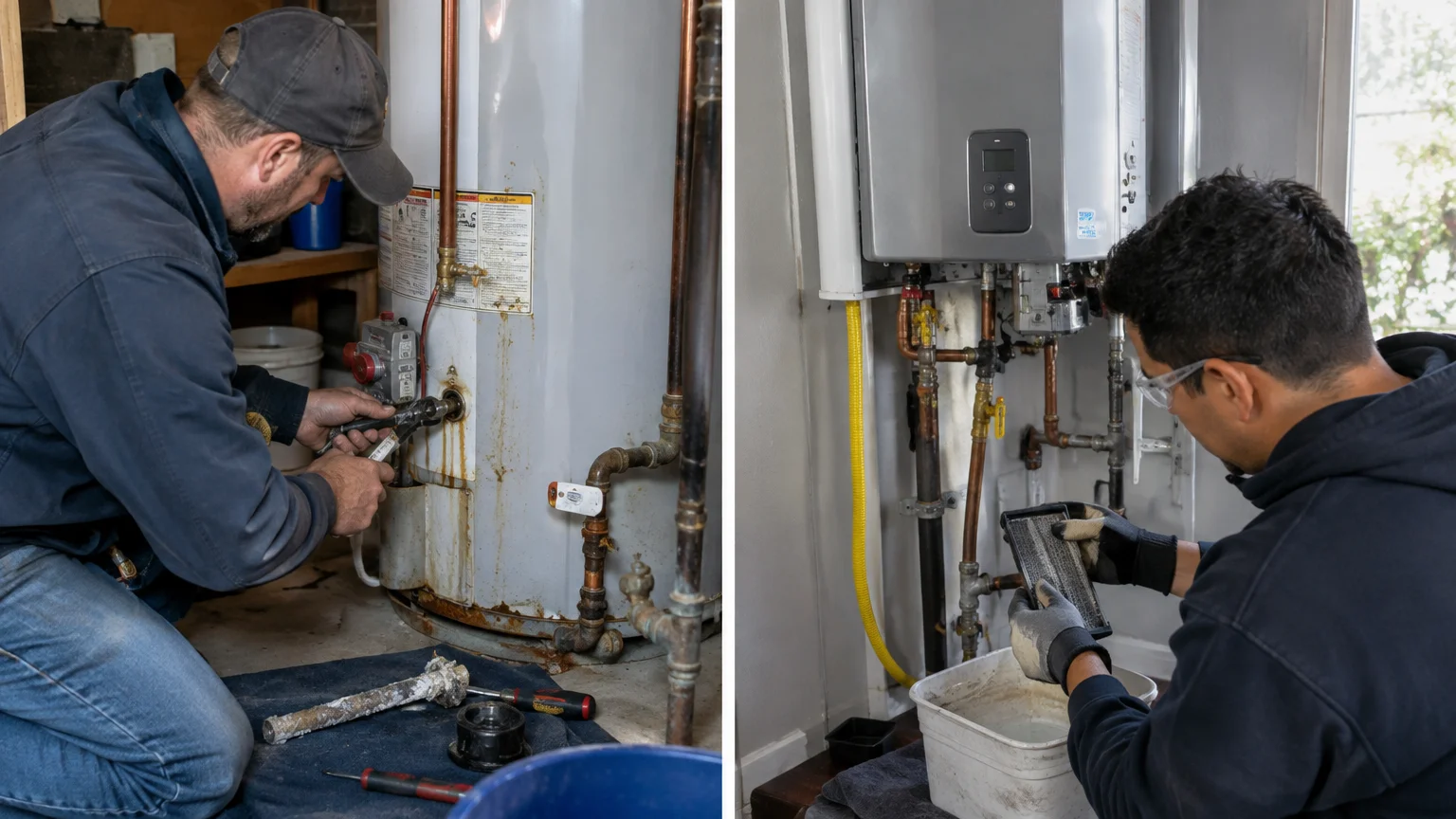
A tank water heater stores hot water in an insulated container. A tankless water heater warms water only when a tap or appliance needs it. This main difference affects space, energy use, water supply, and installation work.
How storage-tank water heaters work
A storage-tank unit uses a burner or electric elements to heat water ahead of use. The tank keeps that water ready for showers, sinks, and appliances. Some heat leaves the tank between uses. This is called standby heat loss.
Tank systems are common in US homes. They are familiar and often simple to replace. A properly sized tank can serve several fixtures at once. Once the stored supply runs low, the household must wait for the unit to heat more water.
Tank water heaters come in several sizes and fuel types. Common choices include electric, natural gas, and propane models. The right option depends on available fuel, space, demand, and local installation rules.
How tankless water heaters heat water on demand
A tankless unit has no large storage tank. When someone opens a hot water tap, a sensor starts the burner or heating elements. Water then moves through a heat exchanger. This part transfers heat into the water.
Since the unit does not keep a full tank hot, it can limit standby heat loss. It also takes less floor space. Still, its output has limits. The unit must match the number of fixtures used at the same time and the temperature of incoming water.
Both systems can fail without proper care. Water Heater Repair may help with leaks, weak heating, strange sounds, or error codes. A professional can explain when repair makes sense and when Water Heater Replacement may be safer. Plumber Jefferson City MO helps property owners compare both choices based on real needs.
Which Water Heater Provides Better Energy Efficiency?
Tankless water heaters often use energy more wisely because they heat water on demand. A tank unit uses energy to keep stored water hot. Actual results still depend on fuel, use, size, insulation, water temperature, and care.
How standby heat loss affects tank water heaters
A tank water heater turns on and off to keep stored water warm. Heat slowly leaves the tank even when no hot water is used. This loss is called standby heat loss. Better insulation can reduce it, but cannot remove it fully.
A tank may still suit a home with steady hot water needs. It can provide hot water quickly because the supply is already heated. Lower demand makes the stored supply last longer. Heavy demand can make the tank recover slowly.
Energy use may also rise when sediment builds inside the tank. Sediment is mineral material that settles at the bottom. It can make heating less effective and put stress on the unit. Regular service can help find this issue early.
What affects the efficiency of a tankless system
A tankless unit avoids most standby heat loss. It starts only when hot water is needed. Its work depends on flow rate, heating power, water temperature, and incoming water temperature.
The system may work harder when cold water enters the home. Long showers, repeated laundry loads, and several hot taps can also raise demand. Proper sizing matters more than choosing the largest unit.
Homeowners can safely fix dripping taps, use sensible temperature settings, and keep the service area clear. They should not open gas controls, change wiring, or bypass safety parts. A trained professional should handle those tasks.
For a home in Jefferson City, weather and water conditions may affect the choice. A local plumbing review is better than relying only on a product label. It helps match the unit to real household use.
How Do Tankless and Tank Water Heaters Compare for Hot Water Capacity?
A tank water heater offers a set supply of stored hot water. A tankless unit can continue heating while demand stays within its flow and heating limits. The better choice depends on how many people use hot water and when they use it.
What happens when a household uses hot water at the same time
A storage tank may serve several fixtures until its hot water runs low. A large tub, shower, dishwasher, and washing machine can use the stored supply quickly. The system then needs time to heat more water.
A tankless unit may provide a longer supply when demand stays within its rated flow. Too many fixtures can spread the available heat across several outlets. Water may become cooler or flow may drop when the unit cannot meet total demand.
Households should list their main hot water activities before choosing a system. Note whether showers overlap, a soaking tub is used, or several sinks run together. This information helps the installer choose the right system for a home or business.
How flow rate and recovery time affect supply
Flow rate means how much water a heater can warm during use. It is considered with temperature rise. Temperature rise is the difference between incoming cold water and the desired hot water temperature. Both affect a tankless unit’s output.
A tank model is judged by storage size and recovery rate. Recovery rate means how fast the unit heats replacement water after the stored supply is used. Gas and electric models may recover at different speeds.
The system with the highest output is not always best. An oversized unit may need extra work, while an undersized unit may give poor comfort. A qualified plumber can measure demand for a home, rental, or commercial property.
If hot water stops suddenly, the owner can check power, the breaker, and any gas appliance message. Do not relight equipment if there is a gas smell. Leave the area and contact the proper emergency service.
What Are the Installation Requirements for Each Type?
Tankless and tank water heaters may need different gas lines, vents, circuits, water connections, and drains. Professional sizing and installation help keep the system safe and in line with local rules.
Space, venting, gas, and electrical considerations
A tank heater needs room for the unit, service access, water lines, and a safe discharge path. It may also need a drain pan, based on its location and local rules. A leaking tank can release a large amount of water.
Tankless units are smaller, but they are not simple plug-in replacements. Gas models may need larger gas pipes and approved vents. Electric models may need strong circuits and enough panel capacity. These needs must be checked before equipment is chosen.
Venting carries combustion gases away from the building. It must use approved materials and follow the maker’s instructions. A blocked or damaged vent can create a serious safety risk.
Location matters as well. Outdoor units need protection from freezing weather. Indoor units need air flow, drainage, and service access. The installer should also check water pressure and pipe condition.
Why professional sizing and installation matter
Correct installation involves more than connecting water lines. The installer must check capacity, fuel, vents, electrical needs, temperature controls, safety valves, and drains. The work must follow local codes and maker instructions.
Poor installation can cause leaks, weak heating, unsafe combustion, error codes, or early failure. It may also affect a property inspection or warranty claim. Professional Water Heater Installation helps lower these risks.
Homeowners can clear the work area, list hot water problems, and gather details about the current unit. They can ask what care the new system needs. They should not change gas lines, wiring, vents, or pressure controls themselves.
Plumber Jefferson City MO serves the main Jefferson City area, including Downtown Jefferson City, Capital Mall, Holts Summit, Wardsville, St. Martins, Taos, and nearby communities. Local experience can help account for a property’s age, layout, and service needs.
Which Water Heater Has Lower Long-Term Maintenance Needs?
Neither system is maintenance-free. Tank heaters need checks for leaks, rust, sediment, valves, and the anode rod. Tankless units need filter cleaning, inlet checks, and periodic flushing to remove mineral buildup.
Common maintenance for storage-tank units
A tank system should be checked for rust, moisture, odd sounds, and changing water temperature. A leaking tank may point to internal corrosion or a failed connection. Water near the base should never be ignored.
The temperature and pressure relief valve is an important safety part. It releases pressure when conditions become unsafe. Never block, cap, or remove it. A plumber should inspect a valve that leaks or fails to work.
An anode rod helps protect the tank from rust. It slowly wears down as it draws corrosive elements from the water. Anode Rod Replacement may help extend tank life when done at the right time.
Some homeowners can check visible leaks and keep the area clear. They should not drain a hot tank without knowing the safe steps. Hot water can burn skin, and the wrong valve action can cause damage.
Tankless system flushing and component checks
Tankless units often need flushing to remove mineral deposits from the heat exchanger. Mineral scale is hard buildup that can reduce heat transfer and limit flow. Homes with hard water may need closer care.
A technician may check inlet filters, valves, burner parts, ignition parts, sensors, and vents. The service plan depends on the unit, water quality, fuel type, and maker’s instructions.
A tankless unit may show warning codes for flow, temperature, ignition, or vent problems. The owner can record the code and check the manual. Do not remove covers or work on gas and electrical parts without proper training.
Routine care can help either system last longer. Repeated repairs, a leaking tank, poor output, or unsafe use may point to replacement. Emergency Plumbing may be needed when a heater leaks badly or threatens water damage.
How Does a Tankless Water Heater Compare With a Tank Over Time?
The long-term choice depends on equipment life, repairs, energy use, care, space, and comfort. A tankless system may use less energy during low-demand periods. A tank may offer a simpler replacement in an existing setup.
What influences installation and replacement needs
Replacement work can be more involved when the new heater uses a different fuel or design. A tank-to-tank replacement may reuse some connections. The installer still needs to check vents, valves, drains, and code rules.
Changing from a tank to a tankless unit may require new gas piping, venting, electrical work, mounting, or water connections. The property may need changes to support the unit’s output. These details affect the work plan and final quote.
The final cost is confirmed on a quote after the property and equipment needs are reviewed. The amount can vary with parts, system size, access, fuel, venting, water damage, and urgency. Compare the full work plan, not only the equipment label.
How operating life and energy use affect overall value
A system’s value includes comfort, reliability, energy use, service needs, and the chance of early failure. A tankless system may suit a small space or a home that wants on-demand heating. A tank may fit better where stored hot water and simple replacement matter most.
Owners should also consider future repairs. A unit with hard-to-find parts may be harder to service. A common system may be easier for local technicians to repair. Review the maker’s care instructions and warranty terms.
Keep records of repairs, flushing, valve checks, and replacement parts. These records can reveal repeated problems. They also help a new owner or tenant understand the system.
Plumber Jefferson City MO can review the current heater and explain whether repair or replacement fits the property. For customers in Jefferson City, local service can help address leaks, weak heating, and urgent heater problems before they cause wider damage.
Should You Choose a Tankless Water Heater or a Tank?
A tankless heater may fit when space is limited, demand changes often, and the property supports the needed gas or electrical work. A tank may be more practical when stored hot water, simple replacement, and familiar service matter most.
When a tankless system may be the better fit
Tankless systems can suit homes that want less standby heat loss and more floor space. They may work well for additions, small utility areas, and properties with careful hot water use.
The owner should confirm that the system can meet peak demand. The installer must check incoming water temperature, flow needs, venting, fuel supply, and electrical capacity. Without these checks, comfort may suffer.
A tankless system is not the answer to every weak-heating problem. A blocked filter, bad sensor, scale buildup, or failed heating part may need repair instead. Proper testing should come before replacement.
When a conventional tank water heater may be more practical
A tank may suit a household that uses several fixtures together and has a setup for direct replacement. It can also work well when the owner wants a familiar system and stored hot water.
A tank is not automatically old-fashioned or wasteful. A well-sized, well-insulated unit can serve a home reliably. Regular checks can help reduce leaks, sediment problems, and corrosion.
The final decision should fit the property, not a simple rule. A plumber can compare the current system, hot water habits, space, fuel, safety needs, and future plans. Contact us to arrange professional help from Plumber Jefferson City MO.
Key Takeaways
- Tank heaters store hot water, while tankless units heat water on demand.
- Tankless systems can limit standby heat loss but need careful sizing.
- Tank systems may provide strong short-term output from stored water.
- Both types need safety checks, maintenance, and skilled installation.
- The right choice depends on demand, space, fuel, access, and future plans.
Frequently Asked Questions
Is a tankless water heater better than a tank heater?
Neither option is always better. A tankless model may suit homes that want on-demand heating and less storage space. A tank may suit homes that need stored hot water and a simpler replacement. A professional should compare demand, fuel, installation needs, and maintenance.
Can a tankless water heater run out of hot water?
A tankless unit can keep heating water while demand stays within its flow and temperature range. It may struggle when many fixtures run together. Poor sizing, cold incoming water, scale, or low flow can also reduce performance. Correct design helps prevent these issues.
Does a tankless water heater need regular maintenance?
Yes. Many tankless systems need periodic flushing to remove mineral scale from the heat exchanger. Filters, sensors, burners, vents, and connections may also need checks. Needs vary by model and water quality. Follow the maker’s instructions and use a qualified technician.
Can a homeowner install a tankless water heater?
A homeowner can gather information, clear the work area, and check for visible leaks. Installation should be handled by a qualified professional. It may involve gas, high electrical loads, venting, water pressure, and local code rules. Incorrect work can cause fire, shock, carbon monoxide, or water damage.
When should a water heater be repaired instead of replaced?
Repair may make sense when the problem involves a replaceable part, loose connection, sensor, valve, or control. Replacement may be wiser when the tank leaks, corrosion is severe, failures repeat, or the unit no longer meets demand. A professional inspection can separate a repairable fault from a failing system.
If you are not sure what you are dealing with, it is worth having someone look at it before it turns into a bigger job. Get in touch with Plumber Jefferson City MO today and we will tell you where you stand.