Property plumbing problems often start with a slow drain, weak water flow, damp mark, or strange sound. Owners should record these signs and arrange a check before damage spreads. Early action can protect walls, ceilings, fixtures, tenants, and daily work. This guide explains common problems and safe next steps.
Table of Contents
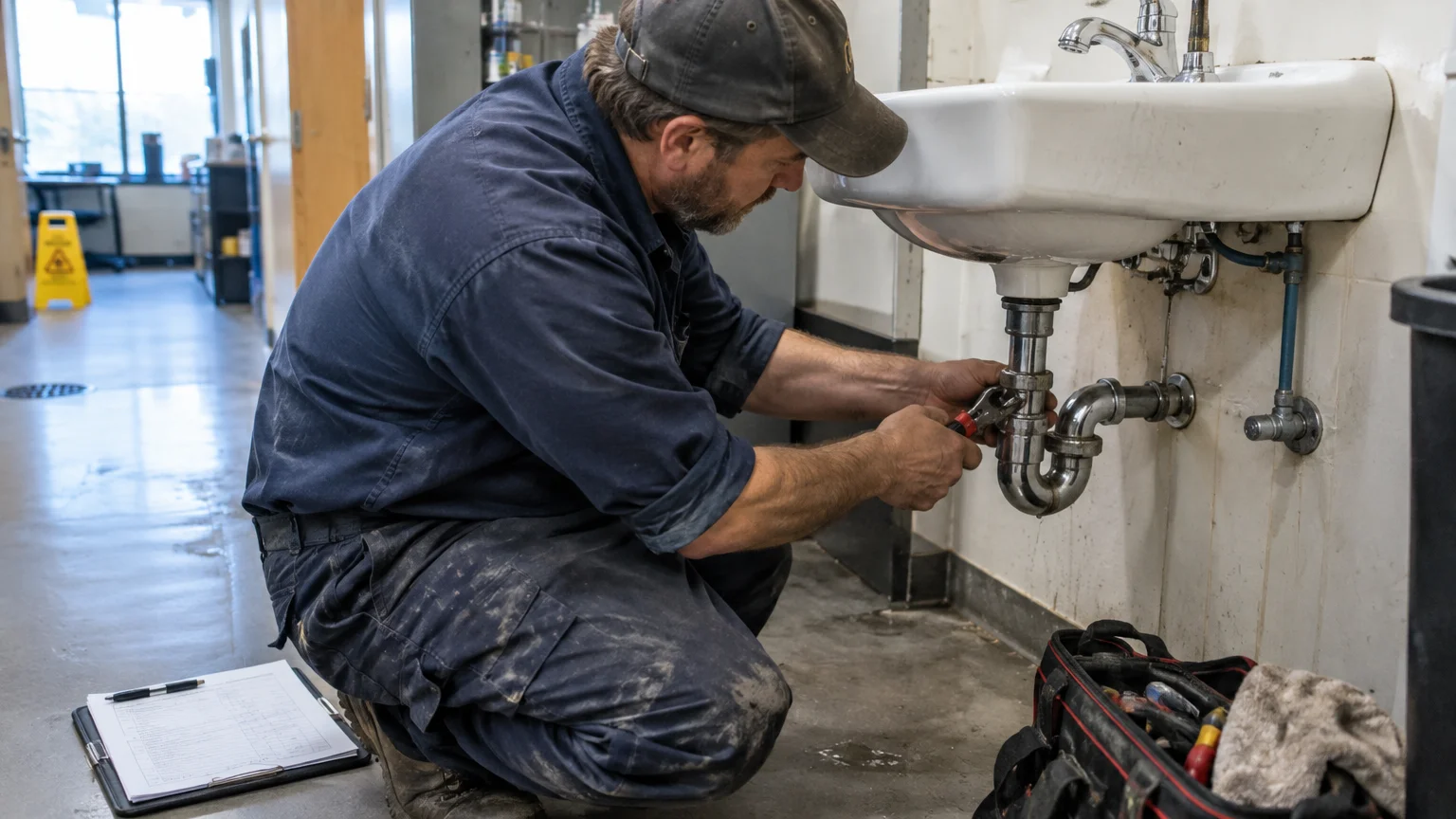
- What are the most common property plumbing problems?
- Which warning signs indicate a developing plumbing problem?
- How can leaks affect a commercial property?
- When does a blocked drain require professional attention?
- How often should property plumbing systems be inspected?
- What should property owners do during a plumbing emergency?
- How can owners prevent recurring property plumbing problems?
- Frequently Asked Questions
What are the most common property plumbing problems?
The most common property plumbing problems include leaks, blocked drains, weak water pressure, running toilets, water heater faults, and damaged pipes. Commercial sites may also have trouble with sump pumps, backflow devices, shared supply lines, and large drain systems. One small fault can affect many rooms or tenants.
How commercial plumbing issues differ from residential problems
Commercial plumbing systems serve more people and often run for longer hours. A small fault in an office, apartment building, or shop can affect several suites. A blocked shared drain may also send water back into more than one unit. Large pipes, pumps, valves, and heaters can make the source harder to find.
Residential plumbing usually has fewer fixtures and shorter pipe runs. Commercial buildings may have kitchens, public restrooms, laundry areas, tenant bathrooms, and service rooms. These systems need clear records and planned care. Plumber Jefferson City MO can help property owners decide which problems need urgent help and which can wait for planned plumbing repair.
Which building systems deserve the closest attention?
Owners should watch supply pipes, drain lines, water heaters, shutoff valves, pumps, toilets, sinks, and gas-connected equipment. Gas work must be done by a qualified professional. A gas odor is an emergency. Occupants should leave the area, avoid flames and switches, and follow local emergency advice.
Water heaters also need close checks. Rusty water, odd sounds, leaks, and poor hot water can signal trouble. Services such as Water Heater Installation and Anode Rod Replacement Water Heater may help when a unit needs care or replacement. Plumber Jefferson City MO serves properties around Jefferson City, including Downtown Jefferson City, Capital Mall, Holts Summit, Wardsville, St. Martins, Taos, and nearby communities.
Which warning signs indicate a developing plumbing problem?
A developing plumbing problem often gives signs before a major failure. Owners should take weak flow, slow drains, damp areas, sewer smells, and repeated fixture faults seriously. A simple log can show whether one unit or the whole building has the same issue.
Changes in water pressure, temperature, or drainage
Low pressure at one fixture may come from a valve, aerator, or local supply issue. Low pressure across a building may point to a larger pipe, valve, pump, or supply problem. Sudden high pressure can also harm fixtures and pipe joints. Water that turns hot or cold without warning may signal a heater or mixing valve fault.
Slow drainage is another useful warning. One slow sink may need cleaning, while several slow fixtures may share a blocked line. A toilet that keeps running can waste water and may have a worn flapper, fill valve, or float. Some owners can clean a fixture or replace an easy-to-reach toilet part safely. A hidden leak needs professional help.
Odors, stains, sounds, and recurring fixture issues
Musty smells, sewage odors, brown marks, bubbling paint, and wet ceiling tiles can point to water or drain trouble. Drips behind walls may make sounds that are hard to locate. Gurgling drains can mean trapped air or a growing blockage. Repeated sink or toilet repairs often mean the main cause has not been found.
A property manager should record the place, time, weather, fixture, and steps already taken. This information helps a plumber test the right part of the system. It also gives owners a clear record for tenants, insurers, and future maintenance work. Good notes can reduce delays when plumbing costs and repair choices are reviewed.
How can leaks affect a commercial property?
Leaks can damage paint, insulation, equipment, tenant goods, and building materials. They can stop work and create slip risks. A small leak may look harmless, but hidden moisture can travel through walls, ceilings, floors, and service areas.
Visible and hidden leaks in walls, ceilings, and foundations
Visible leaks may appear under sinks, near toilets, beside water heaters, or below exposed pipes. Hidden leaks may cause warm floor areas, damp smells, peeling paint, stained ceiling panels, or changes in water use. A leak near a foundation can move through soil or concrete and may be hard to trace.
Owners should not open walls or touch electrical equipment while looking for a leak. They may close a nearby shutoff valve when its purpose is clear and the area is safe. If water reaches outlets, equipment, or panels, everyone should stay away and follow emergency safety advice.
How moisture damage can affect tenants and building operations
Moisture can harm flooring, drywall, cabinets, stored goods, and business equipment. It may force a tenant to close a room or move work elsewhere. In a multi-unit building, water can travel between floors and affect people who did not cause the first problem.
A quick response should protect people first, limit water flow, and keep useful records. Photos, videos, repair notes, and tenant reports can help show what happened. Kitchen Plumbing, Sink Repair, and water heater services may address related fixture faults. The right service depends on testing.
When does a blocked drain require professional attention?
A blocked drain needs professional attention when it returns, affects several fixtures, makes wastewater rise, or causes sewage odors. A plunger may help with a simple local blockage. Repeated or shared-line problems need a proper check instead of repeated chemical treatment.
Why recurring clogs may point to deeper drainage problems
Recurring clogs can result from grease, wipes, scale, roots, damaged pipes, poor slope, or a restriction farther along the line. Commercial kitchens may place extra strain on drains because of food waste and grease. In an apartment, one unit may report a blockage while the real fault is in a shared stack.
A safe first step is to stop using the affected fixture. Staff and residents should not pour harsh chemicals into a drain when the blockage is unknown. These products can harm some pipes and create a risk for the person who later opens the line. Drain cleaning by a trained professional can help find the cause and choose a safe method.
Risks of ignoring slow drains and wastewater backups
A slow drain can become a full backup during busy use. Wastewater may spread across floors, enter nearby rooms, and expose people to harmful dirt and germs. It can also damage stock, furniture, flooring, and lower-level finishes.
Owners should treat sewage smells, rising water, and repeated backups as urgent signs. Tenants should report the issue quickly and avoid dirty water. Property managers should document the area, stop unsafe use, and arrange professional help. These steps protect people and give the plumber useful facts.
How often should property plumbing systems be inspected?
Property plumbing systems need planned checks, with extra reviews after major repairs, tenant changes, severe weather, or repeated faults. The right plan depends on building age, occupancy, system design, and past issues. A qualified plumber can help set a schedule that fits the property.
What to include in routine plumbing inspections
A routine check should review visible supply pipes, drains, valves, toilets, sinks, water heaters, pumps, and signs of leaks. It should also cover accessible service rooms and confirm that shutoff points are known and marked. Commercial kitchens may need closer drain and grease checks.
The inspection should record findings, photos, repair needs, and follow-up dates. It does not replace testing by a qualified professional when a leak, gas concern, backflow issue, or hidden pipe fault is suspected. Clear records help owners compare new signs with older conditions.
How building age, occupancy, and usage affect inspection needs
Older buildings may have worn valves, aging pipes, old fixtures, or repairs from different periods. High occupancy places more demand on toilets, sinks, drains, and hot water systems. Buildings with restaurants, laundry rooms, medical use, or many tenants may need closer care.
New owners should review plumbing records soon after taking control. They should learn where the main shutoff, water heater, cleanouts, and key valves are located. Jefferson City property owners can ask Plumber Jefferson City MO about inspection needs for offices, shops, rental buildings, and other managed sites.
What should property owners do during a plumbing emergency?
During a plumbing emergency, owners should protect people, stop water when safe, limit access, and arrange qualified help. The first goal is not to repair every part at once. The first goal is to reduce injury, water spread, and damage to building systems.
Immediate steps to limit water damage and protect occupants
Property staff should follow these steps when conditions allow:
- Move people away from flooding, ceiling damage, exposed wires, and dirty water.
- Stop using nearby fixtures and close the correct water valve if safe.
- Keep people away from electrical equipment touched by water.
- Place containers under minor drips without climbing or entering unsafe areas.
- Record the time, location, visible damage, and steps already taken.
- Arrange emergency plumbing help and follow local safety advice.
A gas smell needs a different response. People should leave the area, avoid flames and electrical switches, and contact the proper emergency service from a safe place. Gas line plumbing must be handled by a qualified professional.
Information to document for owners, managers, and plumbers
Useful records include unit numbers, affected rooms, fixture names, valve locations, photos, videos, tenant reports, and earlier repair dates. Staff should note whether water is clean, dirty, hot, cold, constant, or limited to one fixture. They should not guess at the cause or cover damage before recording it.
The owner or manager should also check whether nearby tenants need notice. Clear updates reduce confusion and keep people away from unsafe areas. Plumber Jefferson City MO can help property managers choose the next plumbing step for sites in and around Jefferson City.
How can owners prevent recurring property plumbing problems?
Owners can prevent recurring property plumbing problems with routine checks, quick reports, clear tenant rules, and planned repairs. Prevention means more than fixing one leaking pipe. It means tracking patterns across the property and acting before small faults cause building-wide disruption.
Creating a maintenance plan for multi-unit and commercial buildings
A useful plan should list fixtures, shutoffs, water heaters, pumps, cleanouts, shared drains, and past repairs. It should set review dates for high-use areas and explain who reports problems. Tenants should know not to flush wipes, pour grease into sinks, or ignore slow drains.
Owners should group related repairs when practical. Several running toilets may point to aging parts throughout one building. Repeated heater faults may call for testing, anode rod service, or replacement planning. Bathroom Installations, Kitchen Plumbing, Sink Repair, and Water Heater Installation can help with larger upgrades when a small repair is not enough.
Key takeaways for protecting long-term property performance
- Treat small leaks, odors, and slow drains as early warnings.
- Track repeated fixture faults across every unit or tenant space.
- Keep shutoff locations and service records easy to find.
- Use professional testing for hidden leaks, gas concerns, shared drains, and major equipment.
- Give tenants simple rules for reporting and preventing plumbing damage.
Conclusion
Good property care starts with quick action and clear records. Owners who inspect key systems, respond to warning signs, and plan repairs can protect tenants and reduce disruption. Contact us today to arrange professional help with property plumbing problems through Plumber Jefferson City MO.
Frequently Asked Questions
How can someone test for a gas leak?
People should not look for a gas leak with a flame or by using electrical switches. A gas odor means occupants should leave the area and follow local emergency guidance. Gas line plumbing requires a qualified professional who can test the system safely and repair the source.
Why does a toilet keep running?
A toilet may keep running because its flapper, fill valve, float, or handle needs adjustment or replacement. An owner may check the tank when the area is dry and easy to reach. If several toilets have the same issue, or water leaks outside the tank, professional testing is wise.
What should a manager do if wastewater backs up?
A manager should stop using affected fixtures, keep people away from dirty water, and limit access to the area. The manager should document the location and damage, then arrange professional help. Repeated backups may point to a shared drain, damaged pipe, or deeper blockage.
Can a slow drain be fixed without a professional?
A simple sink blockage may respond to a plunger and careful cleaning of the drain stopper. Chemical cleaners should not be mixed or used when pipe condition is unknown. A recurring, foul-smelling, or multi-fixture blockage needs professional diagnosis before damage spreads.
How often should a commercial property have plumbing checks?
There is no single schedule for every building. Older properties, busy facilities, multi-unit buildings, and sites with repeated faults often need closer checks. Owners should review visible fixtures and records regularly, then ask a qualified plumber to set a plan based on use and system condition.
If you are not sure what you are dealing with, it is worth having someone look at it before it turns into a bigger job. Get in touch with Plumber Jefferson City MO today and we will tell you where you stand.