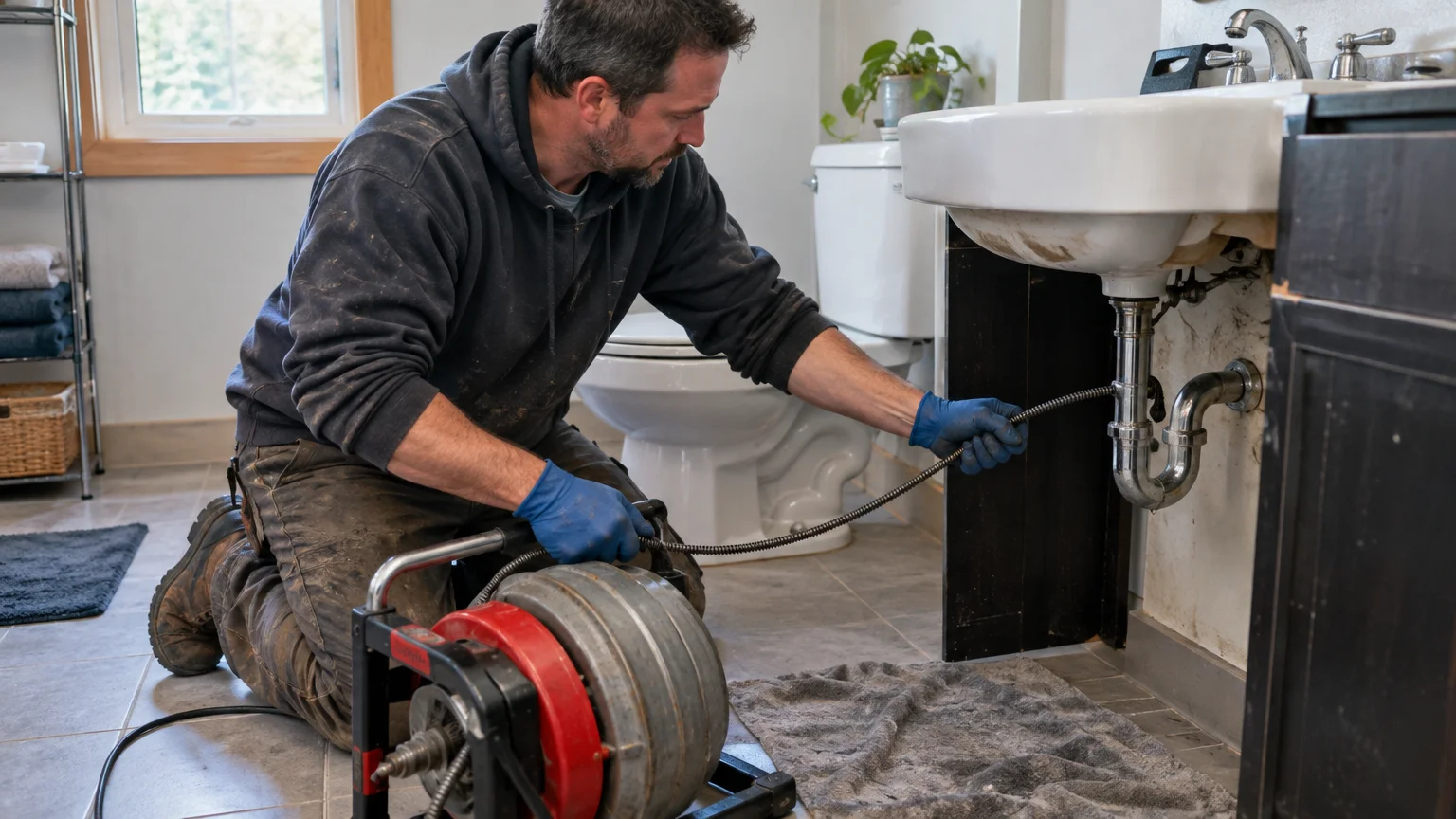
Learning how to use a plumbing snake can help clear a small clog in one drain. Choose a tool that fits the fixture, protect the work area, and turn the cable slowly. Stop if the cable sticks, water backs up, or more than one drain is slow. Deep or repeated clogs need a licensed plumber.
What is a plumbing snake and when should you use one?
A plumbing snake is a flexible cable that reaches into a drainpipe. It can break up or pull out a clog that a plunger cannot clear. A hand snake may work for a small sink, tub, or shower clog near the drain opening.
You do not need a professional for every slow drain. Simple checks, cleaning, and basic care are often safe when one fixture is affected. Removing hair from a tub stopper or cleaning a sink screen can prevent many small clogs.
A plumbing snake may help after a plunger fails and water still stands in the drain. It can also help with soft buildup from hair, soap, or food. Do not use a regular cable as your first choice for a toilet. It may scratch the bowl or harm the trap. Use a toilet auger made for that fixture instead.
Which type of drain snake is right for the blockage?
A small hand auger works well for bathroom sinks, tubs, and showers. A toilet auger has a covered bend that helps it pass through the toilet trap. A longer cable can reach farther into a branch drain, but it can also tangle or harm a weak pipe.
Match the tool to the fixture and likely clog. Never force a thin cable through a hard object. If several fixtures drain slowly, the clog may be farther down the line. In that case, Drain Cleaning from a trained plumber is safer than many home attempts.
What safety precautions should you take before snaking a drain?
Make the work area dry and clear before you start. Wear gloves and eye protection to guard against dirty water. Keep a bucket, towels, and a small container nearby for water and debris.
Never use a plumbing snake after pouring chemical drain cleaner into the pipe. The chemical may stay in the water and cause serious burns. Keep your hands away from the cable opening while it turns. Stop work if water backs up from more than one fixture.
How do you use a plumbing snake correctly?
The basic method is simple. Open the drain, place the cable inside, turn it slowly, and pull out or break apart the clog. Use steady pressure instead of force. Rushing can bend the cable, scratch the fixture, or push the clog farther inside.
A drain may have a stopper, screen, or strainer over the opening. Remove that part and set it aside. On a sink, check the trap below the basin first. A trap is the curved pipe that holds water and keeps sewer gases out of the room. Cleaning it may solve the clog without reaching farther into the drain.
How do you feed and rotate the cable?
- Put a bucket below the trap or drain opening, then remove standing water.
- Place the snake a few inches into the drain without forcing it.
- Turn the handle clockwise while feeding the cable slowly.
- Pause at resistance, then turn the cable gently against the clog.
- Pull the cable back a little, then push it forward again.
- Repeat until the cable moves more freely through the pipe.
The handle should turn with ease. If it locks, the cable may have reached a hard object or pipe bend. Pull back a little to release it. Do not use a drill with a basic hand snake unless the maker allows it. Extra speed can harm older pipes.
How do you remove the clog without damaging the pipe?
When the cable catches material, pull it out slowly. The clog may contain hair, food, grease, or other waste. Clean the cable after each pass. Several gentle passes are safer than one hard push.
Do not force the cable through a fixed object. Tree roots, broken pipe pieces, and heavy scale need different tools and closer checks. If the pipe is old, weak, or damaged, a professional should check it before you add pressure. Plumber Jefferson City MO can help property owners choose a safer next step when a simple snake does not work.
What should you do after using a plumbing snake?
After the clog clears, flush the drain with warm water. The flow should improve without gurgling, rising water, or a sewer smell. Clean the drain opening, stopper, and trap before putting them back.
Hot tap water may rinse soft soap and grease from some household drains. Boiling water is not safe for every pipe, seal, or fixture. Follow the fixture maker’s advice and never mix cleaners. Regular screen cleaning is a safer way to care for drains.
How do you flush and test the drain?
Run water for a short time and check below the sink for leaks. Fill a sink partway, then release the water to test the flow. For a tub or shower, use a small amount of water. The drain should empty without backup or slow pooling.
Check the trap and nearby joints after the work. A loose connection may leak even when water drains well. If water appears under the fixture, stop the water supply and check the connection. Ongoing leaks need professional help, especially near cabinets, walls, or electrical equipment.
Why can a drain clog return after snaking?
Snaking may open only a narrow path through the clog. Grease, hair, mineral scale, and soap may remain on the pipe walls. A clog that returns can also point to a sagging pipe, root growth, poor slope, or damaged sewer line.
The pattern can help show the cause. One fixture that slows again may have a local clog. Several fixtures that back up together suggest a deeper drain or sewer issue. Plumber Jefferson City MO serves Jefferson City and nearby areas, including Downtown Jefferson City, Capital Mall, Holts Summit, Wardsville, St. Martins, and Taos. The team helps with blocked drains, sewer concerns, and other home or business plumbing needs.
When should you stop using a plumbing snake and call a plumber?
Stop when the cable will not move, comes back damaged, or does not improve the drain. Professional help is also needed when wastewater backs up, several fixtures are affected, or the clog returns soon after cleaning. These signs may point to a deep blockage or damaged pipe.
Emergency Plumbing may be needed when sewage enters the property, a pipe bursts, or water damage spreads. A gas smell is a separate emergency. Leave the area, avoid flames and switches, and contact the gas utility or emergency services as needed. Never use a drain snake to test or repair a gas line.
Which warning signs point to a deeper drain or sewer problem?
The following signs need prompt attention:
- Several sinks, tubs, or toilets drain slowly at the same time.
- Wastewater rises from a floor drain when another fixture runs.
- The drain makes repeated gurgling sounds after cleaning.
- A sewer smell remains after the trap has been cleaned.
- The blockage returns after careful snaking and flushing.
- Wet ground or very green growth appears near a buried sewer line.
A licensed plumber can inspect the line and find the problem’s location. The repair may involve drain cleaning, a camera check, pipe repair, or sewer line work. The right step depends on the pipe condition and blockage location. Good plumbing advice can prevent a small drain issue from becoming major plumbing repair.
How can you prevent future blocked drains?
Drain screens catch hair and food before they enter the pipe. Keep grease, cooking oil, wipes, paper towels, and paint out of household drains. A toilet should receive only waste and toilet paper. These habits help protect homes, rentals, offices, and other properties in Jefferson City.
Respond to slow flow early instead of waiting for a full backup. Routine cleaning may help a busy business drain, but the schedule should fit the building and pipe condition. Plumber Jefferson City MO can explain when professional Drain Cleaning is safer than another home attempt. Plumbing costs can vary because access, pipe damage, urgency, and the needed repair all affect the work; the final cost is confirmed on a quote.
Frequently Asked Questions
Can a plumbing snake clear every blocked drain?
No. A snake may clear a small, soft clog near one fixture, but it cannot fix every pipe problem. Roots, broken pipes, heavy scale, and deep sewer clogs need other methods. If several fixtures back up or the clog returns, a licensed plumber should inspect the drain.
Should a homeowner use a plumbing snake or a plunger first?
A plunger is usually the safer first tool for a simple fixture clog. It uses pressure without sending a cable into the pipe. If plunging does not restore flow, a properly sized snake may help. Stop if the cable meets hard resistance or causes damage.
Can a plumbing snake damage a pipe?
Yes. Careless use can scratch fixtures, bend the cable, loosen joints, or harm weak pipes. Force and high speed raise the risk. Use a tool made for the fixture and work slowly. Older, weak, or damaged pipes need professional care before snaking.
Why does a drain clog keep coming back?
A recurring clog may mean that only a small path was opened. Grease, hair, scale, roots, poor pipe slope, or a damaged sewer line can keep causing trouble. Repeated cleaning without finding the cause may delay the right repair. A plumber can check the line and suggest a lasting solution.
Key takeaways
- A plumbing snake works best on a small clog affecting one fixture.
- Feed the cable slowly and use gentle pressure with steady turns.
- Never use chemical drain cleaner and a plumbing snake together.
- Several slow fixtures or repeated backups may signal a sewer problem.
- Early professional help can limit water and pipe damage.
Conclusion
Knowing how to use a plumbing snake can help clear some simple drain clogs. The tool cannot fix damaged pipes, root growth, or deep sewer blockages. Careful use, clean drain habits, and early action help protect the plumbing system.
Contact us to arrange help from Plumber Jefferson City MO when a blocked drain will not clear, returns after snaking, or affects more than one fixture.